

 Apr 11,2026
A hotel that predicts demand accurately can adjust prices, staffing, and marketing weeks before guests arrive. That ability directly affects revenue. Independent properties once relied mostly on last year's occupancy reports, but forecasting in 2026 is far more dynamic. Modern demand forecasting combines historical booking data, competitor pricing, local events, and real time market signals to estimate future occupancy and room rates. Platforms such as Innstrata Hospitality are helping independent hotel operators centralize these signals so forecasting decisions happen faster and with fewer manual spreadsheets. Understanding how demand forecasting works gives smaller properties the same strategic advantage large hotel chains have used for decades.
What Hotel Demand Forecasting Actually Means
Hotel demand forecasting is the process of predicting how many rooms a property will sell over a future period. The goal is not just to estimate occupancy but to guide pricing, marketing, and operational decisions.
In hospitality, forecasting sits at the core of revenue management, a discipline focused on maximizing profit by adjusting prices and controlling room inventory based on expected demand. According to the definition summarized on Wikipedia, revenue management works by aligning pricing and availability with predicted demand to maximize profitability.
Independent hotels use forecasting to answer practical questions every week:
- How many rooms will sell next weekend?
- Should rates increase or stay stable?
- Do we need additional staff during a local event?
- Should marketing focus on filling gaps in midweek demand?
Without a forecast, pricing decisions often become reactive. Hotels lower rates when occupancy is slow or raise them when inventory is almost gone, but by then the opportunity to optimize revenue may already be lost.
"What gets measured gets managed." – Peter Drucker, Forbes
Forecasting provides the measurement that allows hotels to manage performance rather than simply react to it.
Independent operators often combine forecasting with insights from resources like the Innstrata Hospitality blog to track operational trends and improve planning across marketing, guest management, and pricing strategies.
The Core Data Sources Independent Hotels Use to Predict Demand
Forecast accuracy depends heavily on the quality of data being analyzed. Independent hotels typically combine several internal and external signals to estimate future bookings.

Historical Booking Patterns
Past reservation data remains the foundation of most forecasts. Hotels analyze previous performance to identify patterns such as seasonal peaks, weekend demand, and booking lead times.
Typical metrics include:
- Occupancy by day of week
- Average daily rate (ADR)
- Booking lead time
- Cancellation patterns
- Channel performance
For example, if a boutique hotel historically sells out during a regional festival every October, that pattern becomes a baseline for forecasting the upcoming season. Still, historical data alone is no longer enough because traveler behavior shifts quickly.
Market Signals and Competitor Pricing
Independent hotels increasingly monitor competitor pricing and market demand indicators to refine their forecasts. If nearby hotels suddenly increase rates for a specific weekend, it often signals expected demand from an event or convention.
One of the simplest ways to add this data is by tracking competitive rate changes daily. Operators who want to do this effectively often rely on tools or guides like this resource on how to monitor competitor hotel rates.
External demand indicators often include:
- Local conferences and events
- Flight arrival trends
- Tourism board reports
- OTA search demand
- Competitor rate changes
Combining historical data with forward looking signals significantly improves forecast accuracy compared with relying on past occupancy alone.
Operational and Marketing Data
Marketing campaigns and distribution channels can influence demand months before arrival dates. Email promotions, website campaigns, and direct booking strategies all shape reservation pace.
Hotels that actively grow direct bookings track performance closely. Guides like how to increase direct bookings without OTA discounts show how marketing strategy feeds into forecasting by shifting where and when reservations appear.
Important marketing indicators include:
- Email campaign performance
- Website booking conversion rates
- OTA search visibility
- Loyalty or repeat guest trends
Forecasts become more reliable when operational data, marketing performance, and booking pace are analyzed together.
Key Forecasting Metrics Every Independent Hotel Should Track
Several metrics consistently appear in effective hotel demand forecasts. These numbers reveal how quickly rooms are selling and how likely occupancy is to increase.

Essential Metrics Used in Hotel Forecasting
The following metrics form the backbone of most forecasting models used by independent hotels.
Core Forecasting Metrics Table
| Metric | What It Measures | Why It Matters |
|---|---|---|
| Occupancy Rate | Percentage of rooms sold | Indicates overall demand strength |
| ADR (Average Daily Rate) | Average revenue per room sold | Helps determine pricing strategy |
| RevPAR | Revenue per available room | Combines price and occupancy performance |
| Booking Pace | Speed of reservations for future dates | Signals whether demand is rising or slowing |
| Lead Time | Days between booking and arrival | Helps predict future reservations |
These indicators allow managers to estimate whether future dates will sell out or require promotional support.
Why Booking Pace Often Matters More Than History
Booking pace measures how fast reservations are coming in for a future date compared with previous years.
Example:
- If a hotel had 20 rooms booked for July 4 last year by May 1
- And this year it already has 35 booked
Demand is likely stronger than historical averages suggest.
Monitoring booking pace weekly gives independent hotels an early signal to raise rates or adjust inventory. Many modern property management and analytics systems automate these comparisons so revenue managers can spot trends immediately.
Technology and Tools That Improve Forecast Accuracy
Forecasting used to rely heavily on spreadsheets. Today independent hotels increasingly use integrated platforms that combine reservation data, guest behavior, and operational insights.
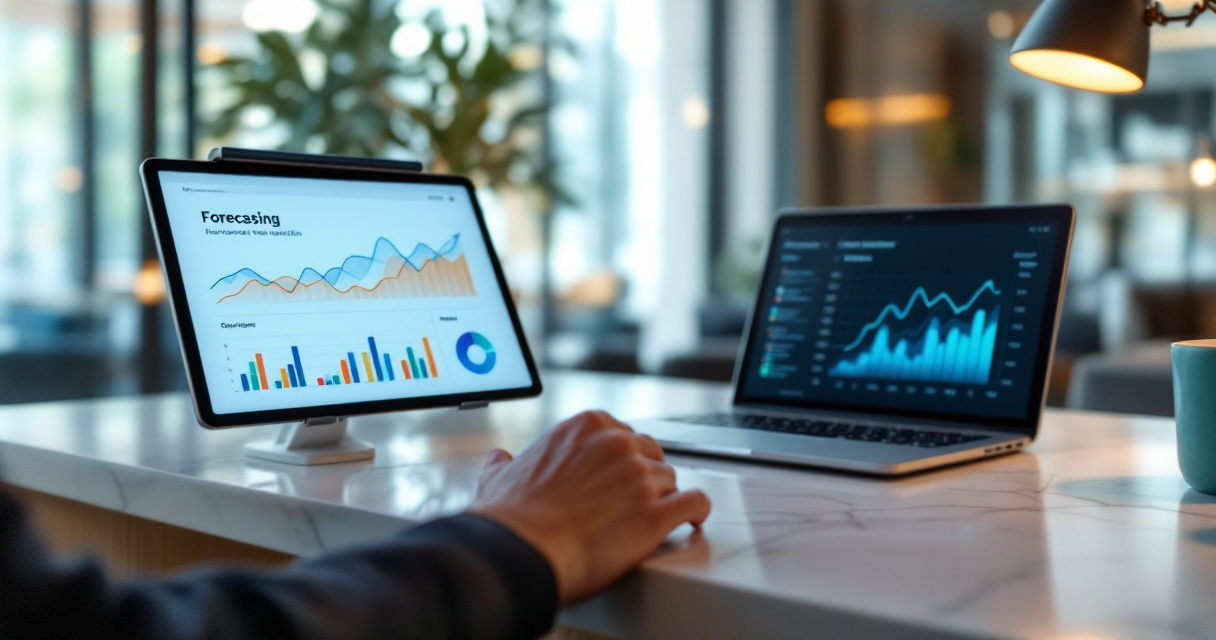
Academic research into machine learning highlights why these tools are improving rapidly. A review of machine learning systems notes that modern algorithms can detect patterns across large datasets that traditional models often miss, improving predictive accuracy in complex decision environments (Springer research).
For independent hotels, the practical benefits appear in several areas.
Operational Data Integration
Platforms such as Innstrata Hospitality combine operational signals across guest management, booking activity, and risk controls. When operational data sits in one system, forecasting becomes easier because managers can see trends across reservations, cancellations, and guest patterns in one dashboard.
This integrated approach also supports related operational tasks such as security checks and guest screening, areas covered in resources like this guide to choosing the best ID scanner for hotel front desks.
Benefits of integrated forecasting systems include:
- Centralized reservation data
- Automated occupancy projections
- Rate recommendations based on demand
- Alerts when booking pace changes suddenly
Video: Inventory Management Principles That Apply to Hotels
Inventory forecasting concepts used in other industries also apply to hotel room management.
Video: Inventory Management Explained
Rooms function like perishable inventory. If a room goes unsold tonight, the revenue opportunity disappears permanently. That is why accurate demand forecasting directly affects profitability.
A Practical Forecasting Workflow for Independent Hotel Managers
Forecasting works best when it becomes a repeatable weekly process rather than an occasional report. Independent hotel managers often follow a structured review cycle.
Weekly Demand Forecast Process
A simple forecasting routine might look like this:
- Review booking pace for the next 90 days
- Compare current reservations with the same period last year
- Check competitor pricing changes
- Review upcoming events and travel demand indicators
- Adjust room pricing and marketing campaigns
Marketing data should also feed directly into the forecast. Campaign results from strategies like this hotel email marketing strategy that drives revenue help predict future booking spikes.
Common Forecasting Mistakes Independent Hotels Make
Many independent properties struggle with forecasting because they rely too heavily on a single data source.
Frequent mistakes include:
- Using only last year's occupancy numbers
- Ignoring competitor rate changes
- Updating forecasts only once per month
- Failing to monitor booking pace trends
"Without data, you're just another person with an opinion." – W. Edwards Deming, Quote Investigator
The best forecasts combine historical patterns, real time market signals, and operational data from the property itself.
Conclusion
Demand forecasting separates reactive hotels from strategic ones. Independent properties that track booking pace, competitor pricing, and market signals can adjust room rates weeks earlier than competitors that rely only on past occupancy reports.
Modern platforms simplify the process by centralizing operational data and guest insights. Tools such as Innstrata Hospitality give independent hotels better visibility into booking patterns, operational risk, and guest trends, making demand forecasting faster and more reliable.
If your property still relies on spreadsheets or outdated reports, the next step is to modernize your forecasting workflow. Start by reviewing your current booking pace, monitoring competitor rates, and exploring technology that connects operational data with revenue decisions.
You can learn more about solutions designed for independent hotels at Innstrata Hospitality and see how smarter forecasting can lead to higher occupancy and stronger revenue performance.