Mar 29,2026
One disputed credit card transaction can erase the profit from an entire hotel stay. Chargebacks, when a guest disputes a card payment with their bank, force hotels to prove the transaction was legitimate or lose the revenue. As online bookings and digital payments continue to grow, so does the risk of fraud and "friendly fraud." Modern hotel chargeback dispute defense software helps properties gather evidence, automate dispute responses, and recover revenue that would otherwise disappear. Platforms like Innstrata Hospitality are increasingly used by independent hotels and regional groups to manage this problem before it becomes a profit leak.
Why Chargebacks Are a Growing Financial Threat for Hotels
Hotels operate in a payment environment where reservations are often made weeks before arrival, sometimes by a different person than the guest who checks in. That gap creates opportunities for fraud, billing disputes, and chargeback claims. Cardholders can dispute transactions with their issuing bank, triggering a process that forces the merchant to provide proof the charge was valid.
The legal structure behind this process is not new. In the United States, the Fair Credit Billing Act (FCBA) established rules allowing consumers to dispute billing errors on credit cards. The law, enacted in 1974, gives cardholders the right to challenge unauthorized or incorrect charges while requiring merchants to respond with evidence. More details about the law appear in the Fair Credit Billing Act overview.
Chargebacks are not always fraud. Many come from misunderstandings, unclear cancellation policies, or guests who forget about a prepaid reservation. Others fall into a category known as friendly fraud, where the cardholder recognizes the purchase but disputes it anyway.
Common reasons hotels receive chargebacks
- Guest claims the reservation was canceled
- Cardholder says the transaction was unauthorized
- Billing descriptor confusion on the credit card statement
- Service complaints or refund disputes
- Third party booking disputes through OTAs
Why manual dispute management fails
Handling disputes manually creates operational problems for hotels:
- Staff must collect booking records, ID scans, folios, and signatures
- Evidence deadlines are short, often 7 to 14 days
- Different card networks require different documentation
- Many properties simply accept the loss instead of responding
Hotels that process disputes manually rarely track patterns or fraud indicators across properties. For multi property portfolios, that means repeat offenders may continue booking under different names.
For a deeper operational look at prevention strategies, the guide on preventing chargebacks in hotels explains common operational mistakes that increase disputes.
How Hotel Chargeback Dispute Defense Software Actually Works
Chargeback defense platforms combine payment data, reservation records, and fraud analysis to automate the dispute response process. Instead of staff searching for documents after a dispute arrives, the software continuously collects and organizes transaction evidence.

Many systems also integrate with property management systems, payment gateways, and guest verification tools. This creates a complete record of the transaction from reservation to checkout.
"Automation applied to an efficient operation will magnify the efficiency.", Bill Gates, BrainyQuote
In the context of hotels, automation means disputes can be responded to within minutes rather than days.
Key capabilities of modern dispute defense platforms
- Automated evidence collection from PMS and payment systems
- Fraud risk scoring for suspicious reservations
- Chargeback reason code tracking
- Template based dispute responses
- Integration with guest identity verification tools
- Analytics that reveal repeat fraud patterns
Typical chargeback defense workflow
- A chargeback notification arrives from the payment processor.
- The platform automatically gathers supporting evidence such as booking confirmation, IP address, guest communication, and ID verification.
- The system generates a dispute response based on the chargeback reason code.
- Documentation is submitted to the issuing bank through the payment network.
- Analytics track win rates and recurring dispute patterns.
Example evidence used in hotel disputes
| Evidence Type | Why It Matters | Example Source |
|---|---|---|
| Reservation confirmation | Shows guest agreed to booking terms | Booking engine or PMS |
| ID verification | Confirms the cardholder identity | Front desk ID scanner |
| IP address and booking device | Proves online purchase origin | Booking engine logs |
| Signed registration card | Confirms guest checked in | Front desk documentation |
| Communication history | Shows guest acknowledgement of policies | Email or messaging system |
Properties that centralize this evidence dramatically increase the likelihood of winning disputes.
Key Features Hotels Should Look for in Chargeback Defense Tools
Not every dispute management system is designed specifically for hotels. Payment industry tools often focus on ecommerce, which lacks the operational complexity of hospitality. Hotels should prioritize software built around the reservation lifecycle.
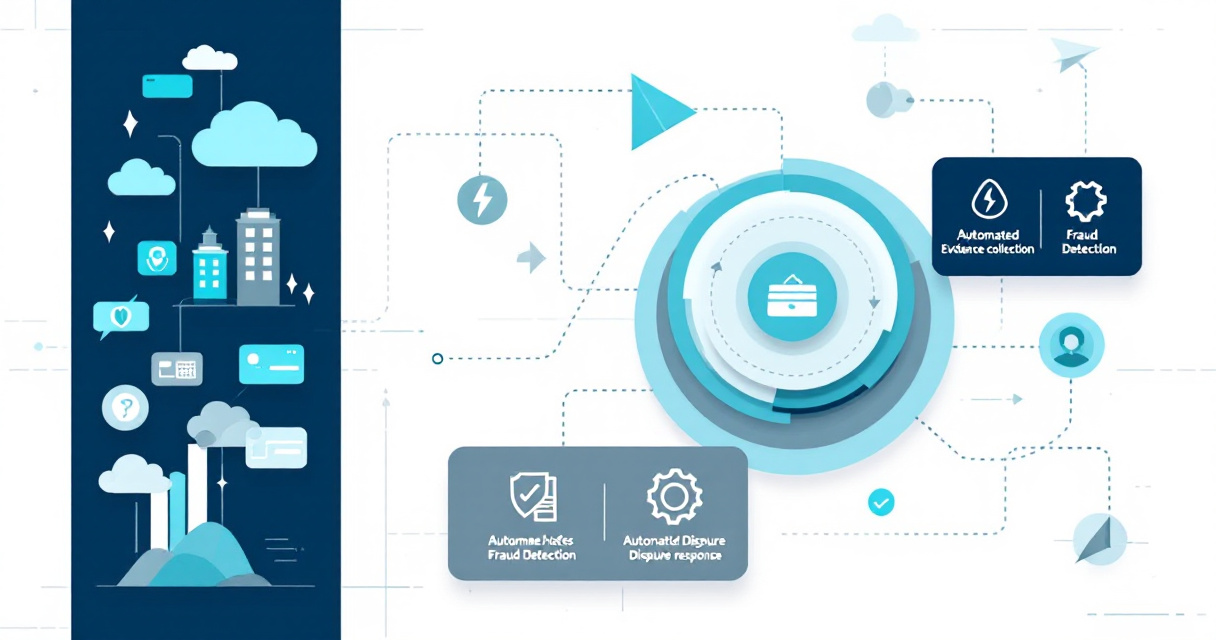
Fraud prevention tools that reduce disputes before they happen
Preventing the dispute is always better than fighting one later. The most effective systems monitor booking behavior and flag suspicious reservations before check in.
Important prevention features include:
- Real time card verification and fraud scoring
- Guest identity validation at check in
- Device fingerprinting for online bookings
- Automated blacklists for repeat offenders
For example, hotels using identity verification technology at the front desk significantly reduce unauthorized card usage. The article on choosing the best ID scanner for hotel front desk operations explains how identity capture supports fraud prevention.
Centralized dispute management dashboard
Hotel operators need a clear view of disputes across properties. Good platforms offer dashboards that display:
- active disputes
- submission deadlines
- chargeback reason codes
- win rate performance
Example capabilities hotels compare
| Feature | Why Hotels Need It | Impact |
|---|---|---|
| Automated evidence generation | Saves staff hours | Faster dispute responses |
| Fraud detection scoring | Stops risky reservations early | Fewer disputes |
| Multi property reporting | Tracks patterns across locations | Identifies repeat fraud |
| Reason code analytics | Improves dispute strategy | Higher win rate |
Some platforms combine these tools with broader operational intelligence. For instance, the Innstrata Hospitality platform includes fraud monitoring, guest tracking, and operational analytics that help properties detect suspicious guest activity across locations.
Operational Strategies That Improve Chargeback Win Rates
Technology alone does not win disputes. Hotels still need strong operational processes that support accurate evidence collection and policy enforcement.

Clear policies reduce dispute success rates
Many disputes happen because cancellation terms are unclear or poorly communicated. Hotels should confirm policies in multiple places.
Key areas to reinforce:
- booking confirmation emails
- pre arrival communication
- front desk check in documentation
- website policy pages
Properties investing in direct booking strategies also reduce OTA related disputes. A practical guide on increasing direct hotel bookings without OTA discounts explains how direct reservations improve payment transparency.
Operational practices that strengthen dispute evidence
- Capture guest ID during check in
- Require signed registration forms
- Store communication logs with guests
- Keep accurate timestamps for check in and check out
- Document no show charges carefully
"Without data, you're just another person with an opinion.", W. Edwards Deming, Forbes
Chargeback disputes are ultimately data battles. The hotel that provides the most detailed transaction evidence usually wins.
Chargeback reason codes hotels encounter most
| Reason Code Category | Typical Scenario | Prevention Method |
|---|---|---|
| Fraud / unauthorized | Cardholder denies transaction | Identity verification |
| No show dispute | Guest claims cancellation | Timestamped policy confirmation |
| Services not rendered | Guest disputes stay quality | Documentation of stay details |
| Duplicate charge | Multiple authorizations | Payment reconciliation |
Understanding these categories helps staff respond with the right evidence rather than generic documentation.
What Chargeback Defense Will Look Like for Hotels in 2027
Chargeback management is shifting toward predictive fraud prevention instead of reactive dispute handling. Payment networks and hospitality technology providers are building systems that identify risky transactions before the booking is confirmed.
Research into cybercrime transaction methods highlights how digital criminals exploit weak verification processes in online transactions. A 2021 study examining online financial crime patterns found that offenders frequently target systems where identity validation is limited (CrimRxiv research paper). Hotels with automated identity checks and behavior monitoring significantly reduce this risk.
Trends shaping the next generation of chargeback defense
- AI driven fraud prediction using booking behavior
- Integrated identity verification during booking
- Shared fraud databases across hotel groups
- Automated evidence packages tailored to card networks
The shift toward integrated hotel platforms
Standalone chargeback tools are slowly giving way to broader hospitality intelligence platforms. Systems that combine guest management, fraud detection, and revenue analytics allow operators to see patterns across properties.
The Innstrata Hospitality system, for example, combines guest monitoring tools with operational analytics that identify suspicious booking patterns. Solutions such as ChargeShield chargeback protection aim to automate evidence collection while flagging high risk reservations earlier in the booking process.
For operators managing multiple properties, this integrated approach can prevent repeat offenders from exploiting different hotels within the same portfolio.
Conclusion
Chargebacks are no longer a rare operational nuisance. For many hotels they represent a consistent revenue leak that quietly erodes margins. Manual dispute handling rarely works because staff lack the time and data needed to build strong evidence packages.
Modern hotel chargeback dispute defense software changes that equation. Automated evidence collection, fraud monitoring, and centralized analytics help properties respond faster and prevent many disputes from happening in the first place.
Platforms like Innstrata Hospitality combine these capabilities with broader hotel intelligence tools that identify suspicious guest behavior across properties. If your property is seeing frequent disputes or unexplained revenue loss, the next step is to review your fraud prevention systems and dispute workflow.
Start by exploring the Innstrata platform or request a demo to see how automated chargeback defense can protect your hotel's revenue.